
Costs Associated with Staffing
Understanding the Difference
How Do Different Costs Affect Revenue?
When your workforce is understaffed, costs quickly add up and cut into your revenue. Overtime wages spike as a smaller team works longer hours, while increased mistakes and rework slow down production. High turnover from burnout means constant recruiting and training expenses, pulling resources away from core business activities. Meanwhile, management spends more time firefighting staffing gaps instead of focusing on growth. Together, these costs reduce efficiency and profitability – making it critical to maintain a reliable, well-supported contingent workforce.
Schedule a personalized demo with the KFI Staffing team to thoroughly assess your current workforce needs, identify any gaps that may be affecting your productivity, and explore tailored staffing solutions designed to keep your operations running at full capacity.
What are Direct Costs?
Direct costs are expenses that can be directly traced to a specific project, product, or service:
- Wages of temporary or contingent workers on a project
- Materials or supplies used for a specific product
- Freight or shipping directly related to client deliveries
In manufacturing, for example, direct costs typically include raw materials, production labor, and equipment usage directly involved in creating a product. Because they can be easily allocated, direct costs play a key role in pricing, budgeting, and profitability analysis
One of the defining features of direct costs is their traceability. If a company is building a piece of furniture, the wood, screws, and hourly wages paid to the workers assembling the furniture are all considered direct costs. As production increases, so do these associated expenses, which is why they are closely monitored for cost-control and efficiency purposes.
What are Indirect Costs?
Indirect costs are not tied to a single project or activity—they support your business as a whole.
- Administrative salaries or office management
- Facility rent and utilities
- IT systems, accounting, and HR systems
Indirect costs support a business’s overall operations but cannot be directly tied to a specific product, service, or project. These costs are often fixed or semi-variable and shared across multiple activities. These costs are necessary to keep the business running but do not directly contribute to the creation of a specific item or service.
Indirect costs are typically allocated across departments or projects using cost allocation methods, such as applying a percentage based on labor hours, square footage, or machine usage. This helps companies in a way that reflects actual resource usage, allowing for more accurate financial reporting and better decision making. High indirect costs can erode profitability, especially in competitive industries
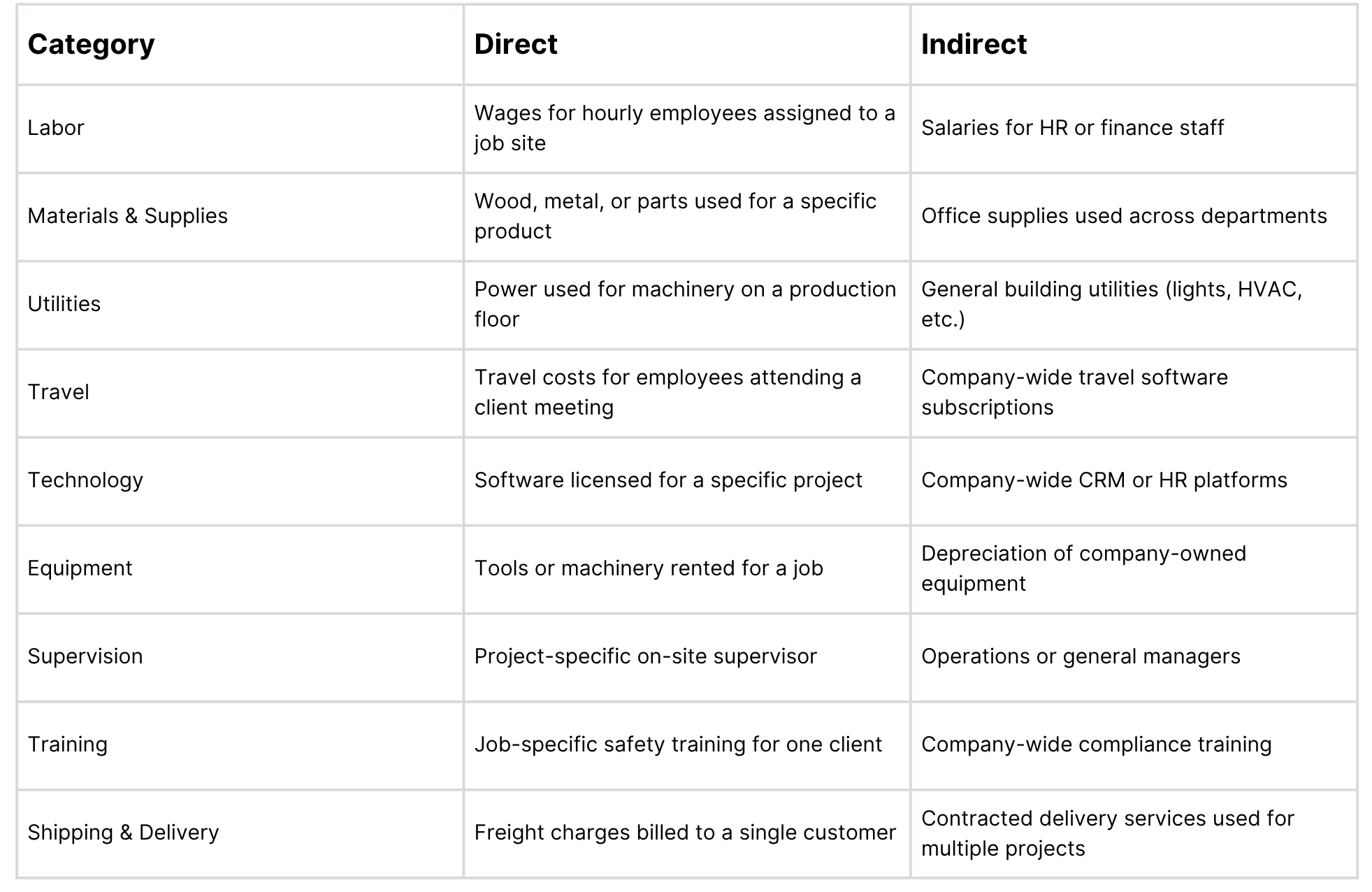
Comparison of Costs Per Department:
Our Staffing Solutions
Understaffing Doesn’t Just Slow You Down - It Silently Costs You More
Whether it’s idle tools, underused subscriptions, or overstretched managers, the full cost of being understaffed touches every corner of your business. KFI Staffing helps stabilize your workforce so you can operate at full capacity – reducing stress, reclaiming efficiency, and recovering lost revenue across the board.